Millipede
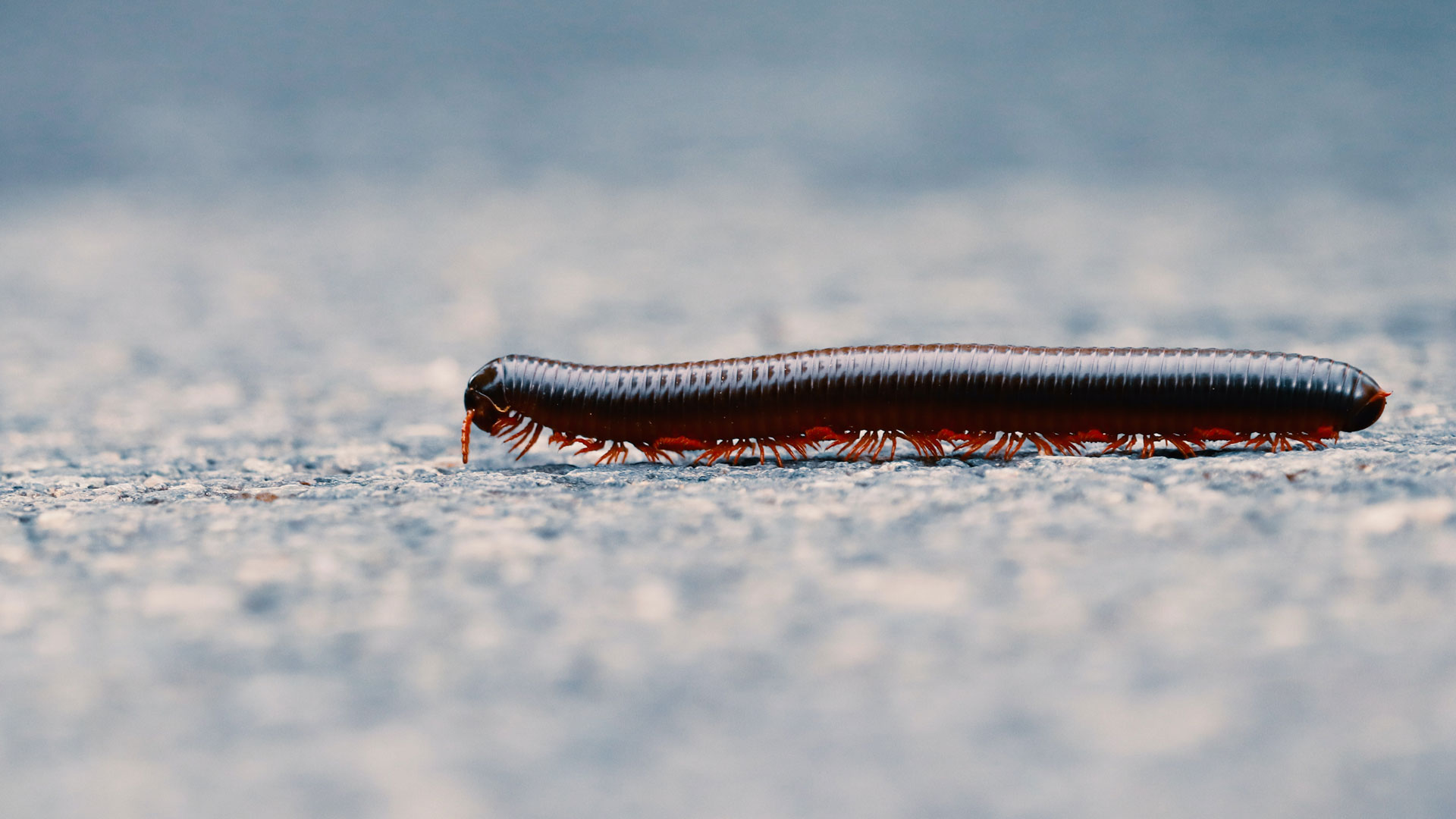
What are millipedes?
There's nothing quite like the feeling of waking up in the morning, taking a step out of bed - and being greeted by a millipede. Or two. Or twenty. Millipedes are small, segmented creatures that have two pairs of legs on each segment. They vary in color, but are usually brown or black. Millipedes are often mistaken for centipedes, but they are not the same thing. Centipedes have only one pair of legs on each segment, while millipedes have two.
Are millipedes dangerous?
Millipedes might look a little creepy, but they're actually harmless creatures that are more likely to curl up into a tight ball than to bite you. While they do not bite or sting, some people may be allergic to them. That said, they can sometimes be damaging to gardens and crops, as they feed on organic matter. If you have a millipede infestation, your best bet is to call in a professional pest control service. At Bigfoot Home Services, we specialize in millipede removal, and we'll be happy to help you get your home or garden back to normal. Thanks for choosing Bigfoot!
Why do I have a millipede problem?
Well, there are a few reasons why your home might be attractive to millipedes. First of all, they're drawn to moist environments - so if your home is particularly damp, that could be why they're hanging around. They also like to eat decaying organic matter - so if you have a lot of rotting leaves or other debris around your property, that could be attracting them. Finally, they're attracted to lights - so if you have porch lights or other outdoor lights that stay on all night, that could be attracting them to your property. They may enter your home through cracks in the foundation or other openings. Once inside, they will hide in basements, crawl spaces, or under sinks and other appliances.
Where will I find millipedes?
They often enter homes in search of food or shelter and can become a pest. Millipedes are also known to eat plants, so they can be destructive to gardens and crops. They often come into homes in search of food or shelter. Millipedes can also cause damage to plants and crops.
How do I get rid of millipedes?
If you have millipedes in your home, it's important to figure out how they're getting in. Check for cracks and gaps in your foundation, windows, and doors. Once you've found the entry points, seal them up with caulk or another appropriate material. The best way to get rid of millipedes is to reduce the moisture in your home. Fix any leaks and remove any sources of standing water. If you have a damp basement or crawlspace, make sure to ventilate it properly to reduce the moisture levels that are attracting them. If you already have a millipede problem, there are some things you can do to get rid of them. One is to vacuum them up. Another is to use a product like boric acid, diatomaceous earth, or food-grade DE. You can also try using a natural predator like nematodes.
Because they're nocturnal and they like to slink around in tight, dark spaces, they can be very hard to track down and eliminate. Bigfoot has been studying the art of the millipede for years, and he'll have no problem tracking them down and stomping them out. Give Bigfoot Home Services a call for all your pest control needs!
FAQ
Picking the right pest control provider for your home isn't a decision you should make all willy nilly. We are confident that we provide the best service for the best value in the game, and we want you to feel that confidence as well. These are some of the most common questions we hear from new customers.
If you have any questions that aren't answered here, you can contact us through the form below, or by clicking the chat bubble in the bottom right.

Absolutely! Our word is our bond, so when we say we'll get rid of your pest problems, we are dead serious about that. If you see bugs between quarterly treatments, don't hesitate to text, call, or email our office so we can get a technician out to you ASAP.
If you see increased activity after a treatment, that usually means the bugs are freaking out because they know the end is nigh. The products we use have been scientifically designed for the long game. They don't kill on contact, they kill by sticking to bugs and letting them do the dirty work for us. Pests carry the insecticide back to the nest and spread it to the others, effectively wiping out the community, instead of individual bugs.
Our top-notch products usually take about two weeks to reach maximum effectiveness. If you have any concerns before or after that two week period, don't hesitate to text, call, or email our office so we can get a technician to your home to check on things.
Hate to break it to you, but that little can of Raid isn't going to cut it. You might kill a wasp or spider here and there, but there's a much bigger picture that you can't understand if you're not trained in the ways of the pest. As a matter of fact, if you kill a few pests, the hive can begin to sense that they are under attack and actually go into baby-making overdrive to offset the onslaught. That's why the products we use take time to spread. By the time the pests notice something is wrong, it's too late. Pest control is based on years of science, testing, and experimentation with products and application methods 1000x more advanced than the can of bug spray you got at Home Depot.
Unfortunately, bugs have a few million extra years of evolutionary survival skills on us, which makes them tricky little... buggers. It's impossible to kill every last bug, or prevent a single one from coming back. That's why we advocate for quarterly pest treatment: it's simply the best way to be bug-free in the long term. Bugs can still scurry, crawl, or fly into your home at any time, and that's why we offer free re-services between treatments. If the bugs come back, so do we.
We'll play it by eye, but it's typically unnecessary. 99% of the battle against pests is fought and won outdoors. We hit them hard at the source (outside), then create and maintain a barrier around your home to keep these pesky suckers out of your humble abode. Most of the time, only one of four yearly services will require indoor treatment, but we will always treat indoors if you see pest activity, or if you just want some extra peace of mind. We're not afraid to go the extra mile –anytime, anywhere.
Of course! We get it, pesticides have a bad rap and sound kind scary. You're trying to protect your family, so it would really suck if our products were more dangerous than the pests we're obliterating with them. Have no fear, the pesticides we use are Environmental Protection Agency (EPA) approved, meaning they've been through a ton of rigorous tests to ensure they are safe for humans and animals alike. But we don't stop there, all of our technicians are highly trained and certified when it comes to the products and methods of application.
In our decades of experience, we've learned that one-time services end up being ineffective in the long run, and we don't want to mess with things that don't make your home a happier and safer place. Quarterly service allows us to maintain our Level Five barrier around your home, ensuring that these stupid bugs don't ever make it to the warmth and safety of the indoors of your home.
Long story short, it's (usually) a waste of your money and our time. Bugs are always active, but considerably less active in the winter months, and almost totally inactive outdoors. Don't worry though, we won't leave you hanging. If you notice a pest problem crop up inside your house from December–February, we'll be there to lay the smack down before you can say, "Jiminy Christmas!"
Contact us
If you have any questions about what's included in the services we offer, don't hesitate to reach out!